2026
Language of the Birds
How to retell this story once more? For it has already been told countless times. It repeats itself through the life of every human who has ever lived and who ever will live, all the way to the Judgement Day.
Let us try it this way. A certain artist (you are here because you love art, aren’t you?), say a zealous easel painter or an immensely clever conceptual artist, had his great role model, an unattainable Genius whose oeuvre he devoutly studied, hoping to one day to touch the heights of art where the master so naturally resided. In his work, he strived to reach even a single atom of that divine da Vinci or Duchamp. After decades upon decades of labour and studying his craft, filled with doubts, despair, and fleeting elation, the artist grew grey, and then lost his hair. He had only a little time left in this earthly world. It was then that an exhibition of his unattainable role model, the artist who had reached the Absolute, came to his town. With the last of his strength, the old master set out to see it, prepared for the blow of final defeat, for the realization that he would never achieve what he had wished and that he had wasted his life. And then, to his own astonishment, he saw that all the works in that exhibition were his very own! He himself was the one he had yearned for! But he had to walk the entire arduous creative path just to realize it.
That is, roughly, the story of the Language of the Birds, the Sufi poem by the Persian poet Farid ud-Din Attar, written around 1177. At the invitation of the Hoopoe, thirty birds set out to find the king of birds, the Simurgh. After hesitation and challenges, accompanied by various allegorical tales, the birds discover in the presence of the Simurgh that they themselves are – Him! The key to enlightenment lies right at the very beginning of the quest, in the name of the bird king itself, for in Persian “si murgh” literally means “thirty birds”.
“Here you are, thirty birds – si murgh
Exhausted, impatient, and stunned.
But We, We are like the Simurgh, and more than that
We are the true Essence of the Simurgh.
Inspirationally and joyfully vanish into Us
So that in Us you may find yourselves again.
[…]
While they travelled, they had a guide
When they arrived, both beginning and end vanished.”
That story of mystical self-realization is not unique to Sufism. It also exists in Zen Buddhism, as the Ten Bulls (or Ten Ox-Herding Pictures), in Christianity in the teachings of Meister Eckhart (and in parts of the New Testament as well), and in all spiritual practices that have served humanity throughout the millennia to help realize one’s place in reality. And art itself is one such practice.
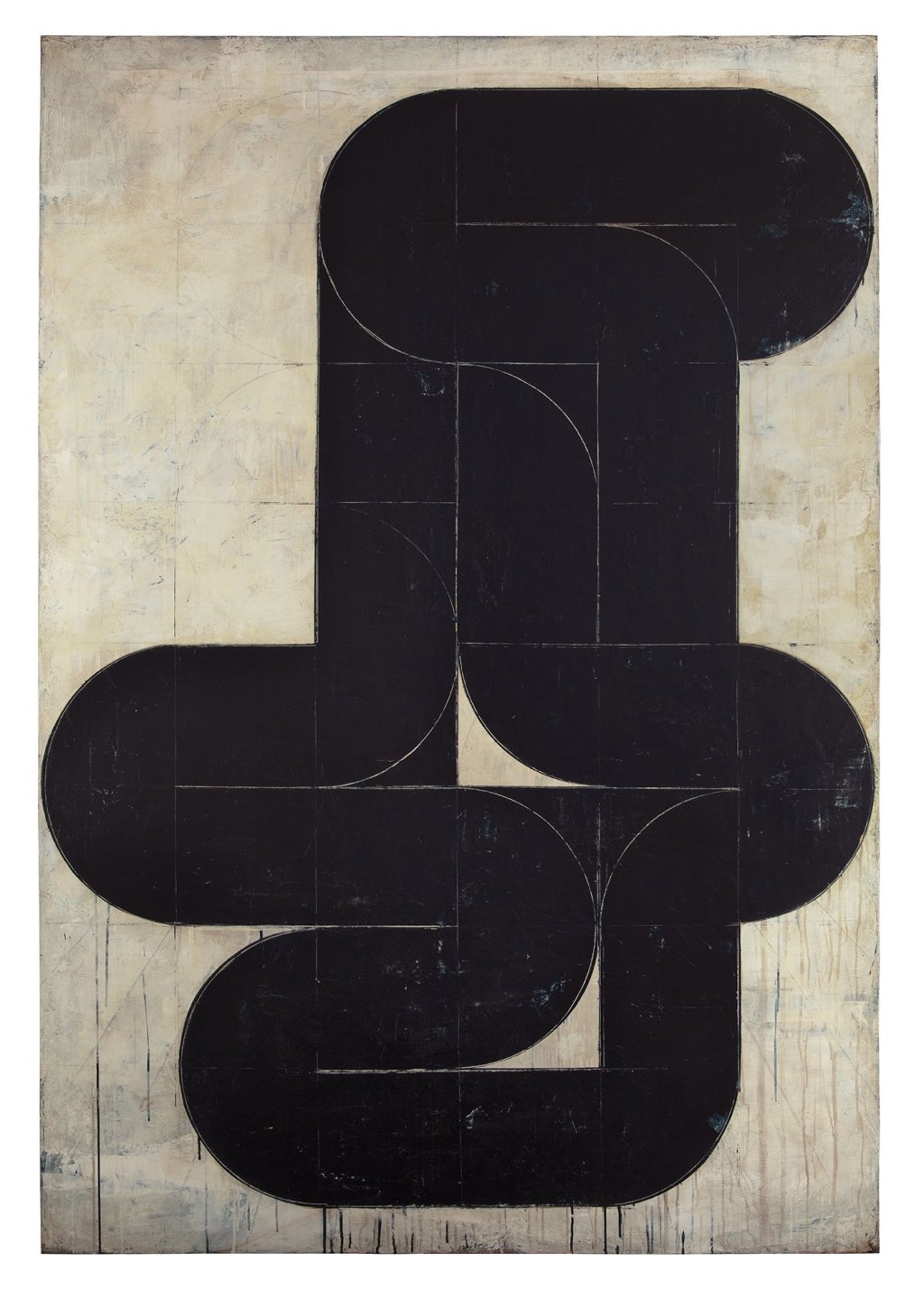
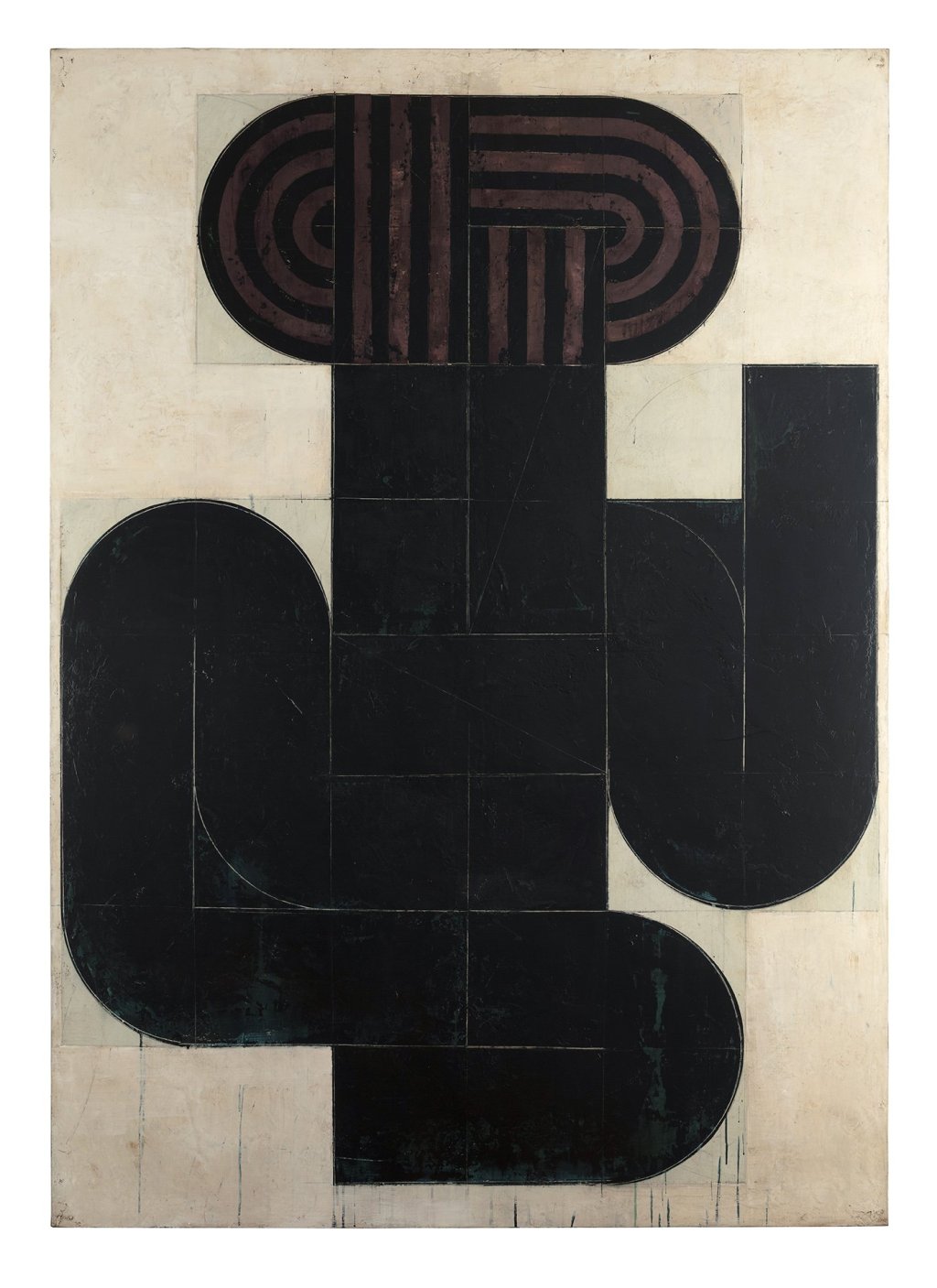
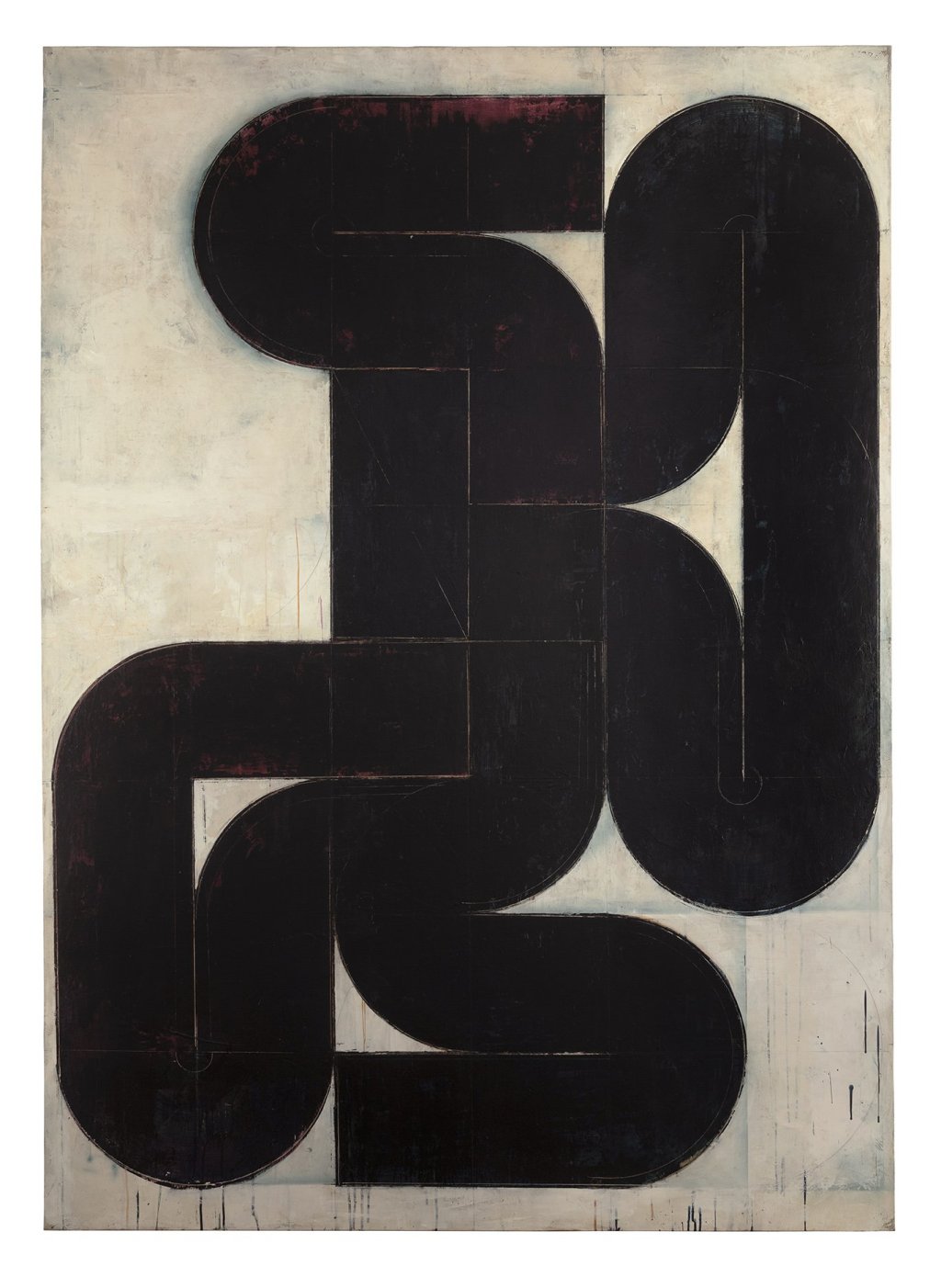
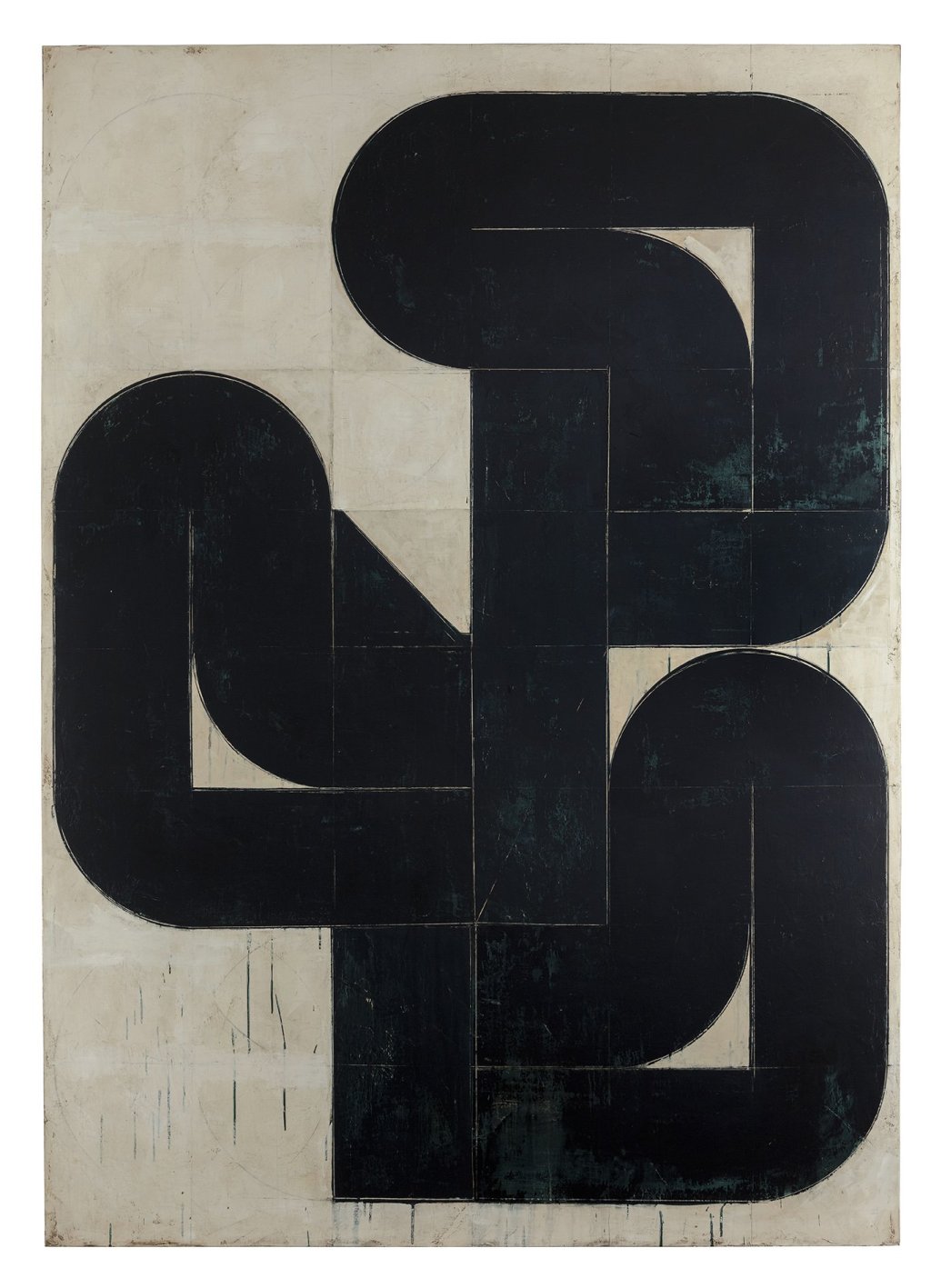
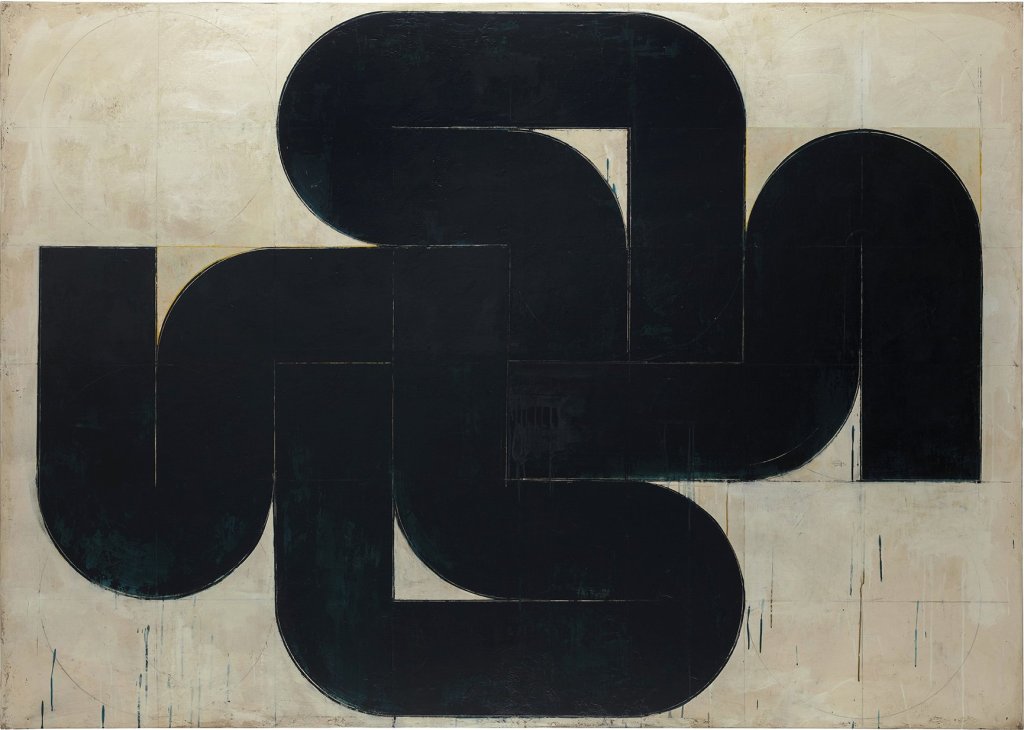
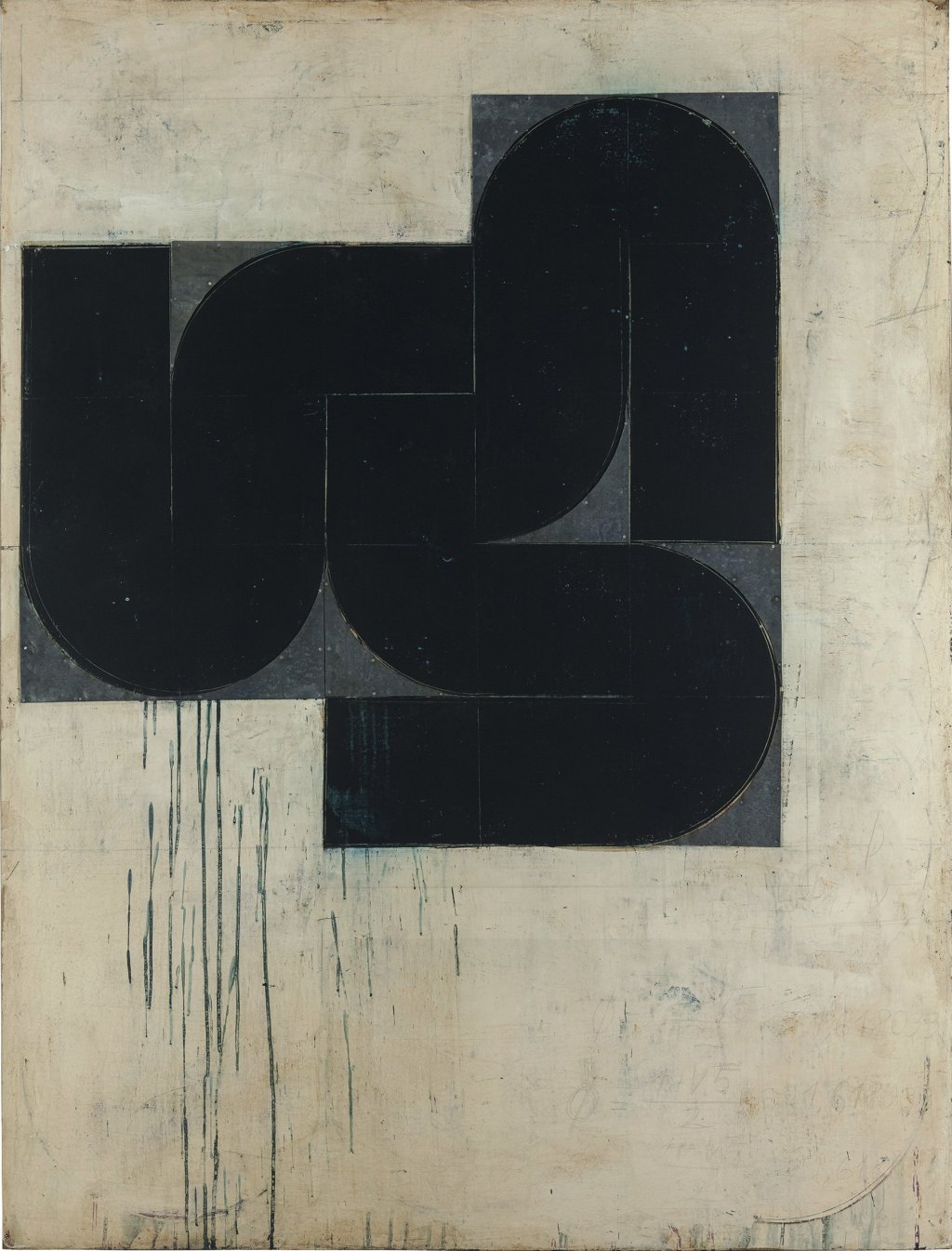
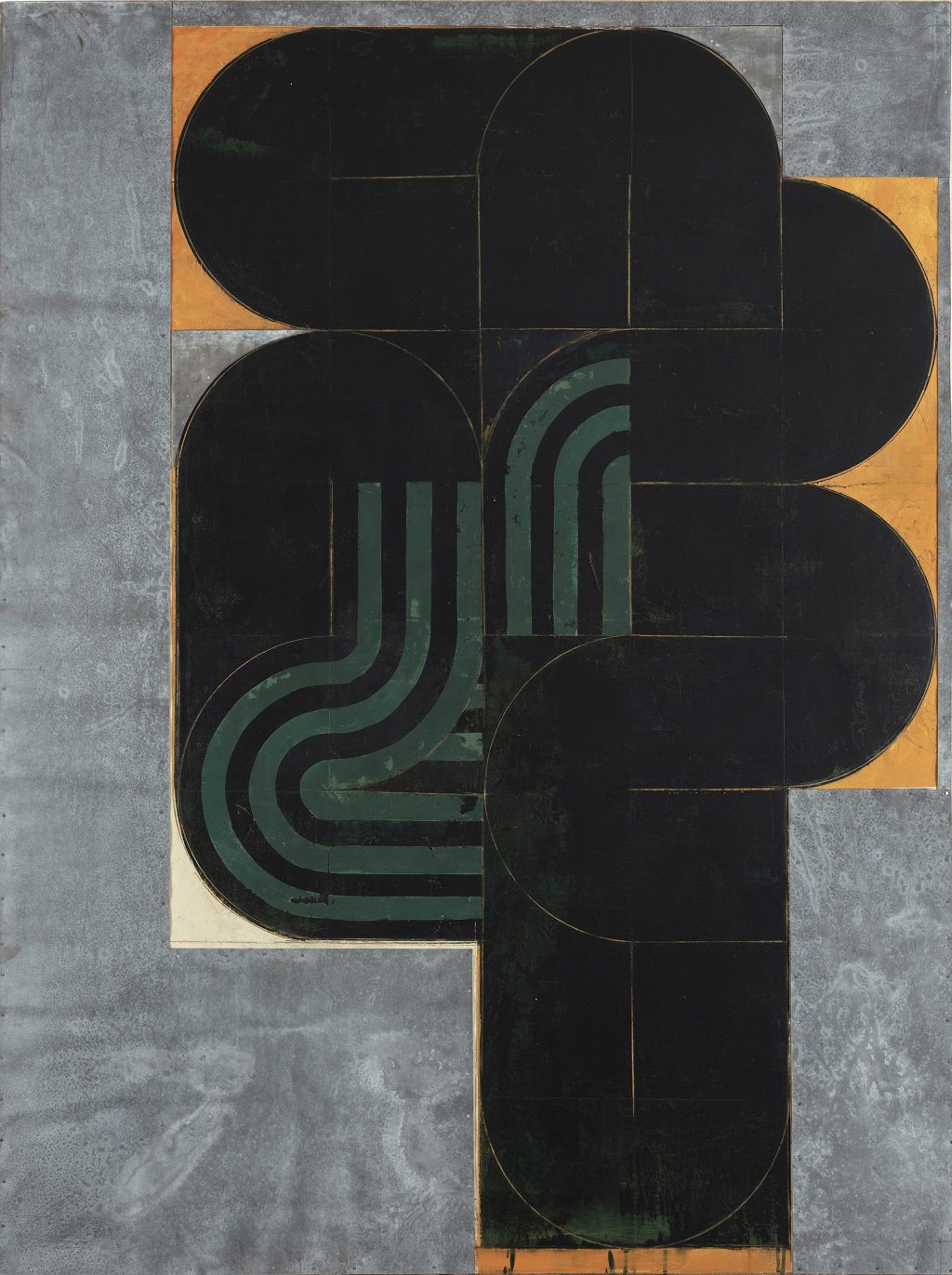
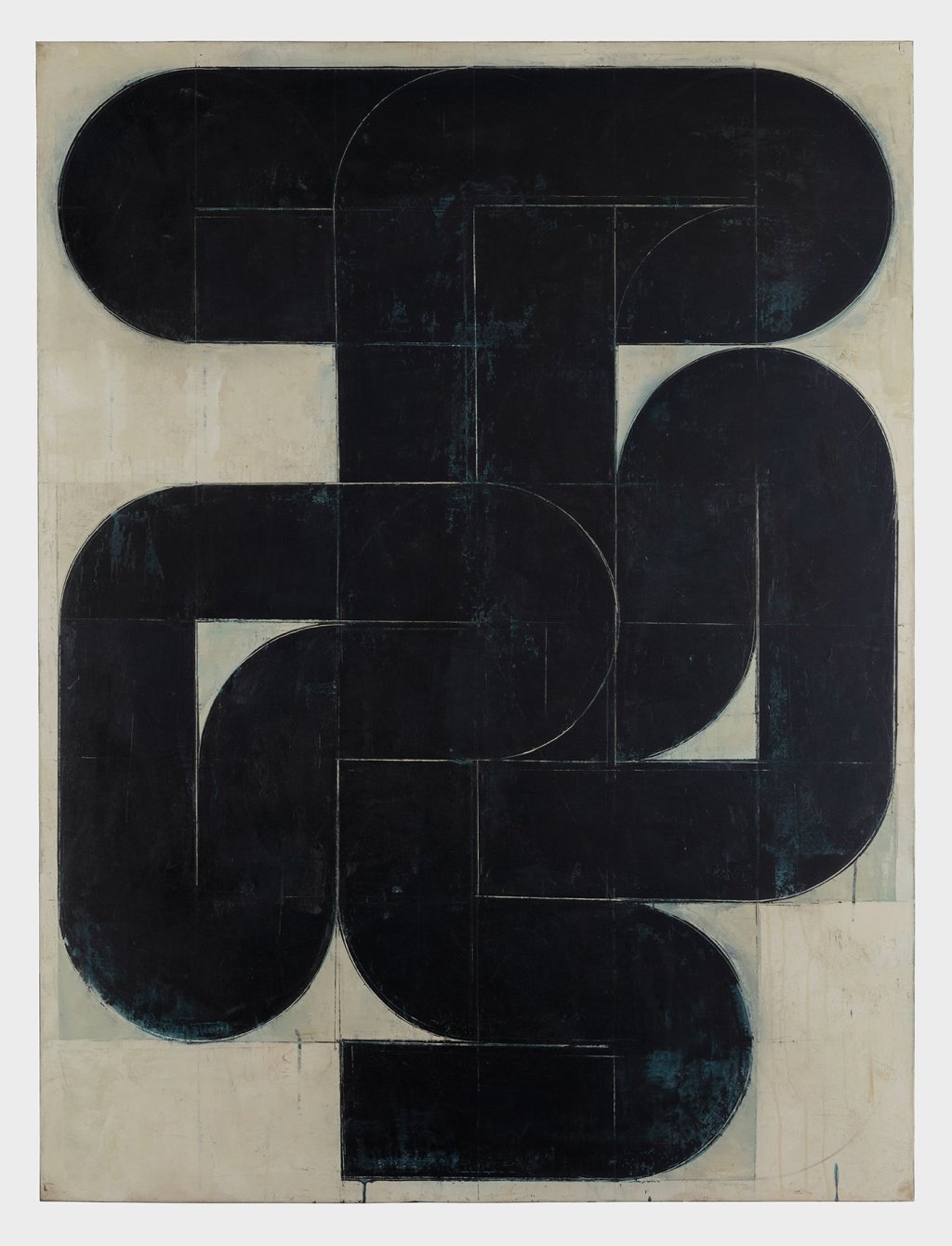
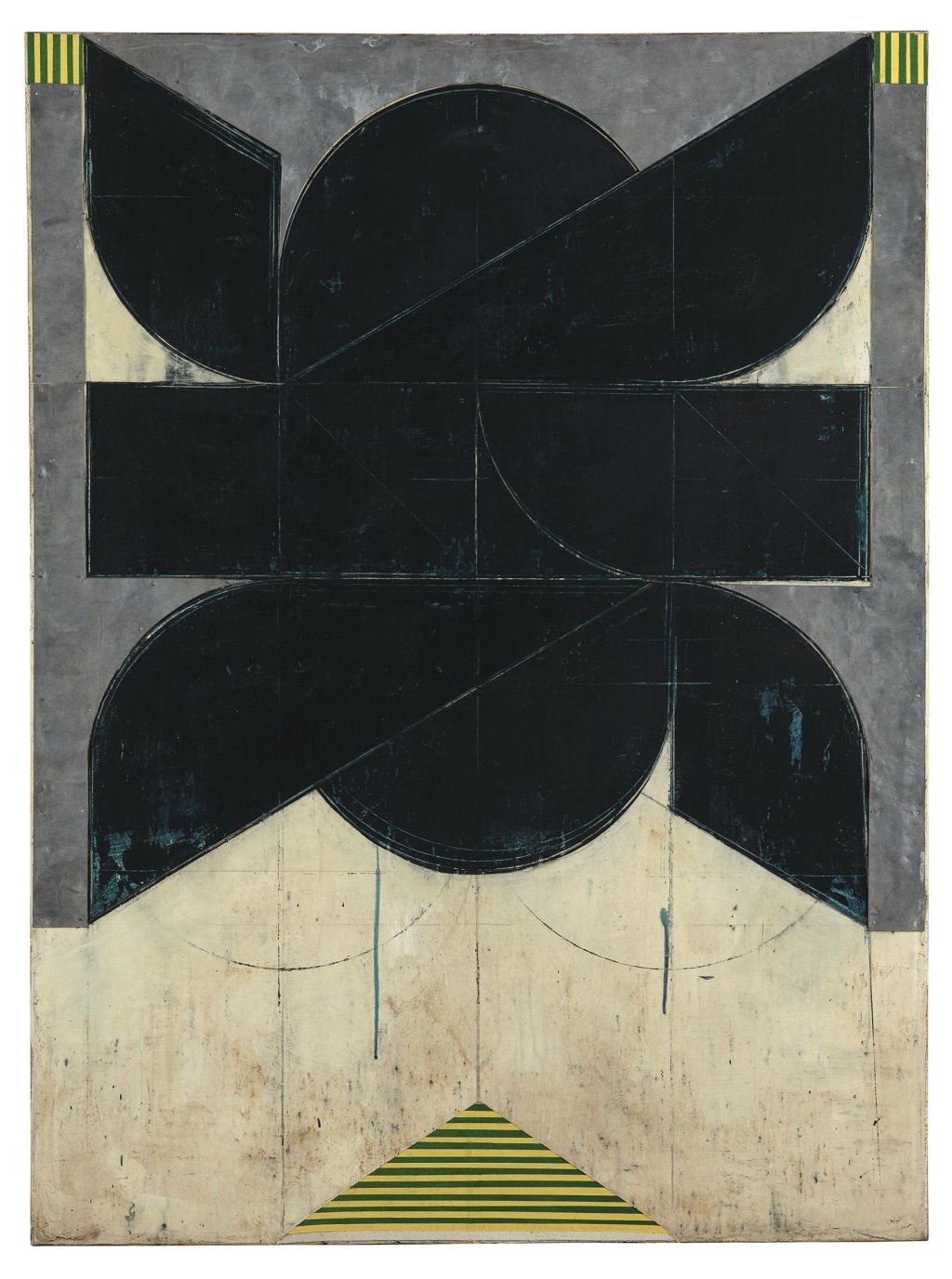
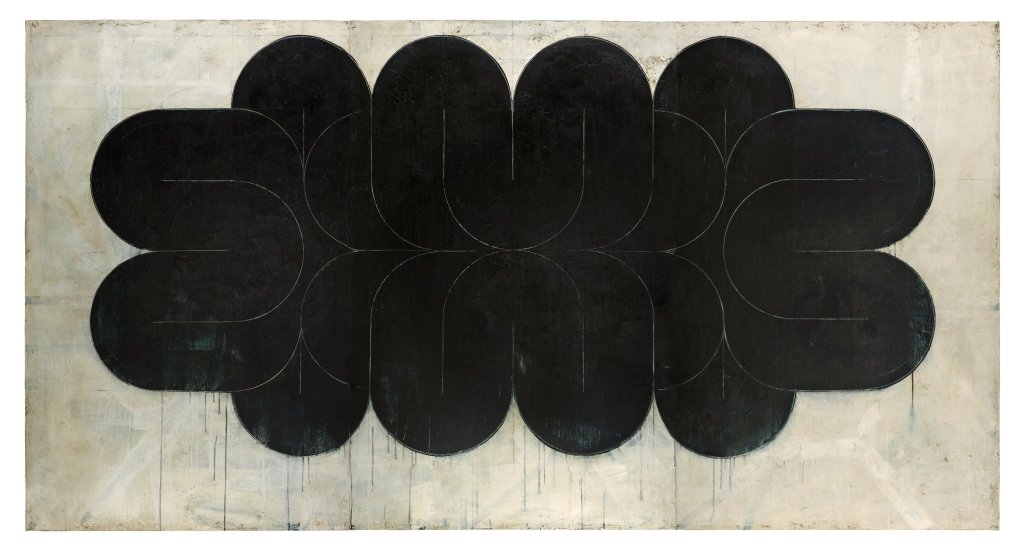
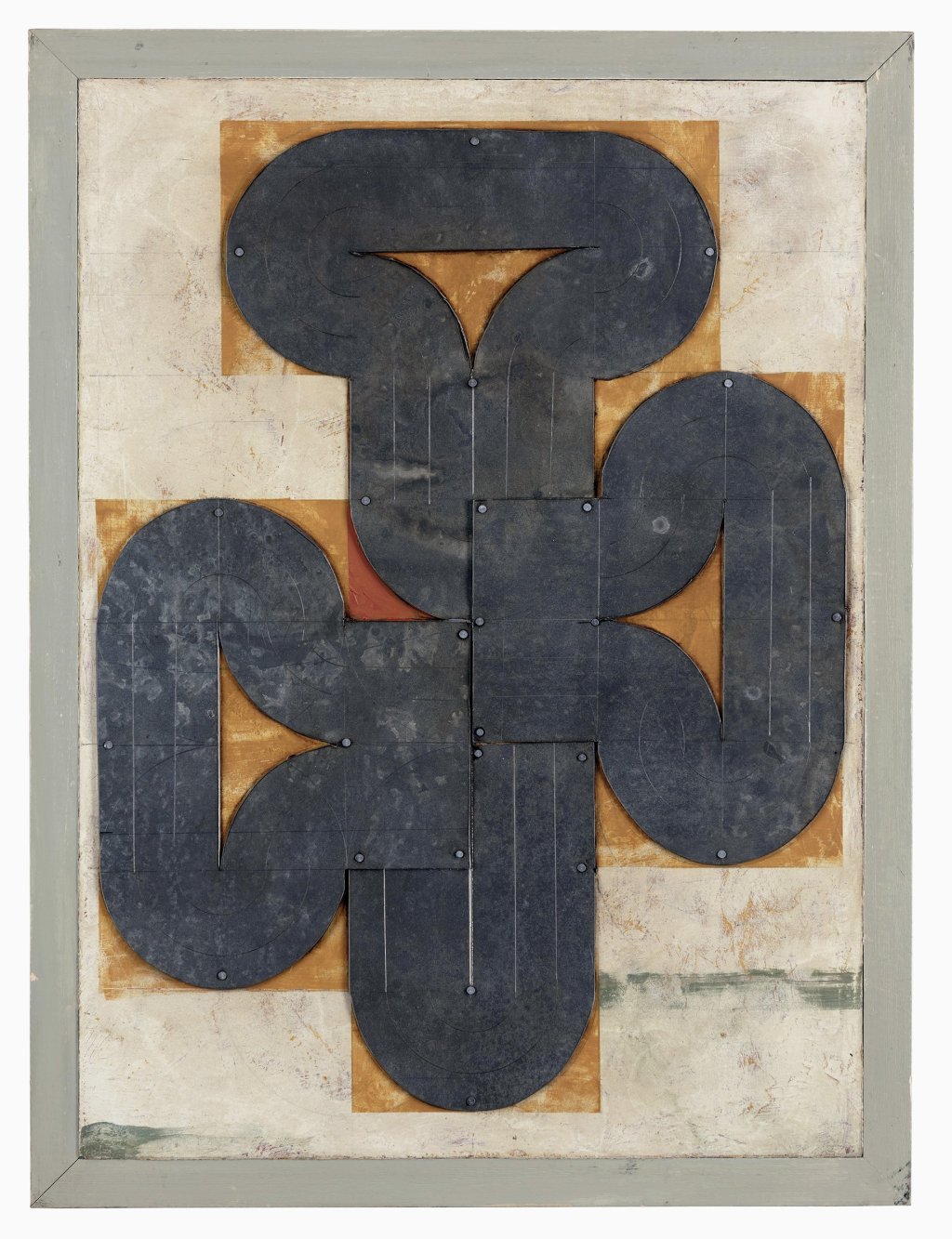
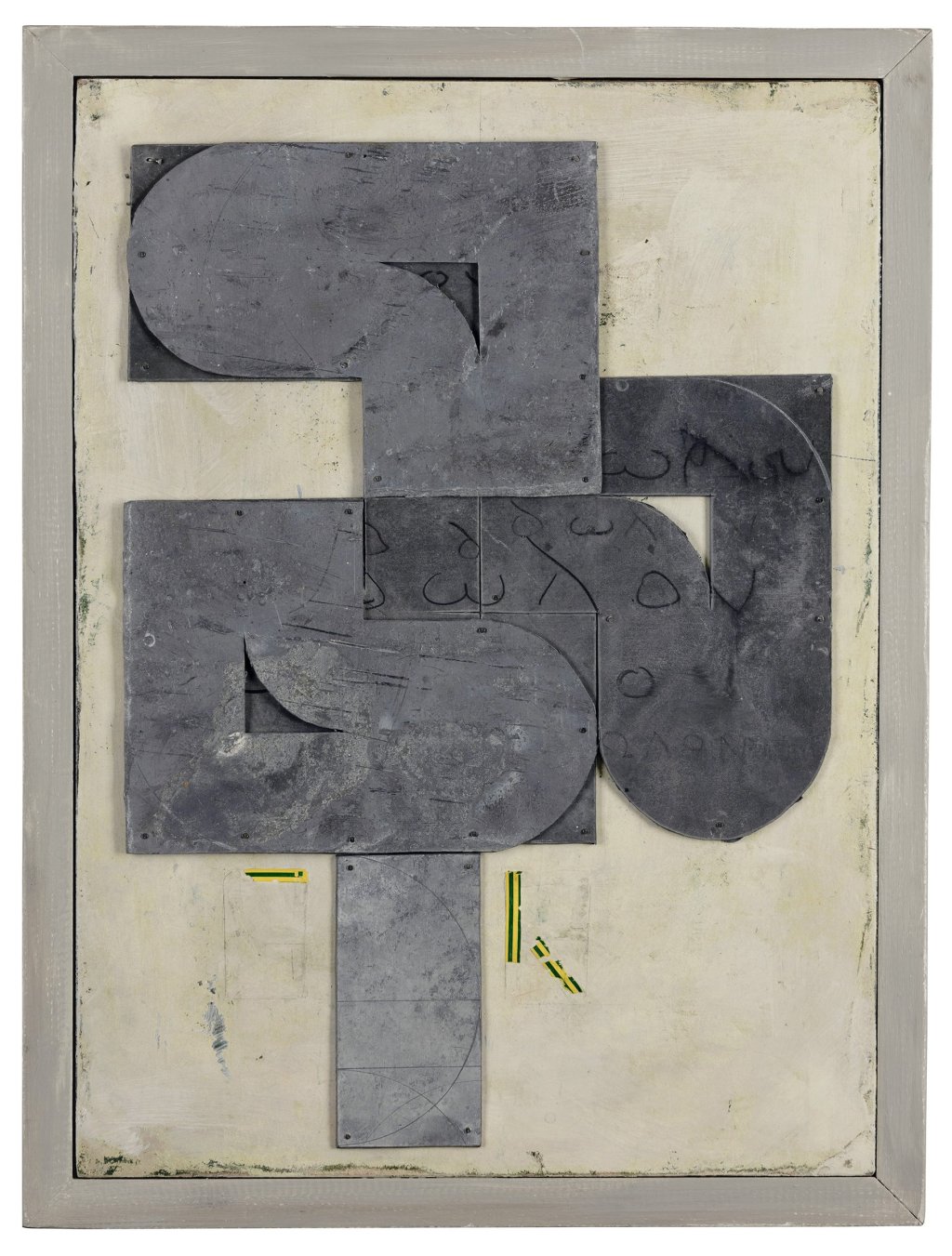
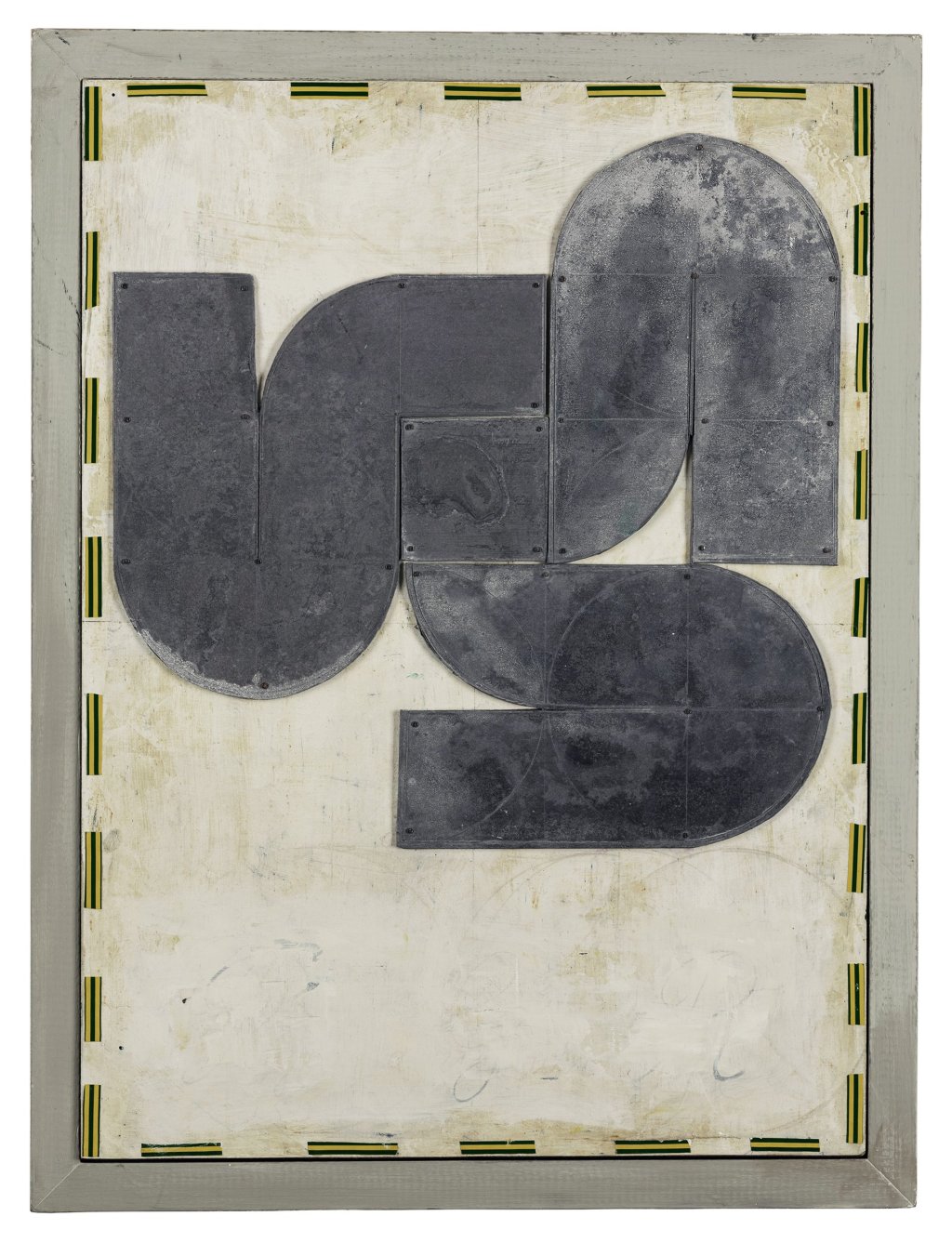
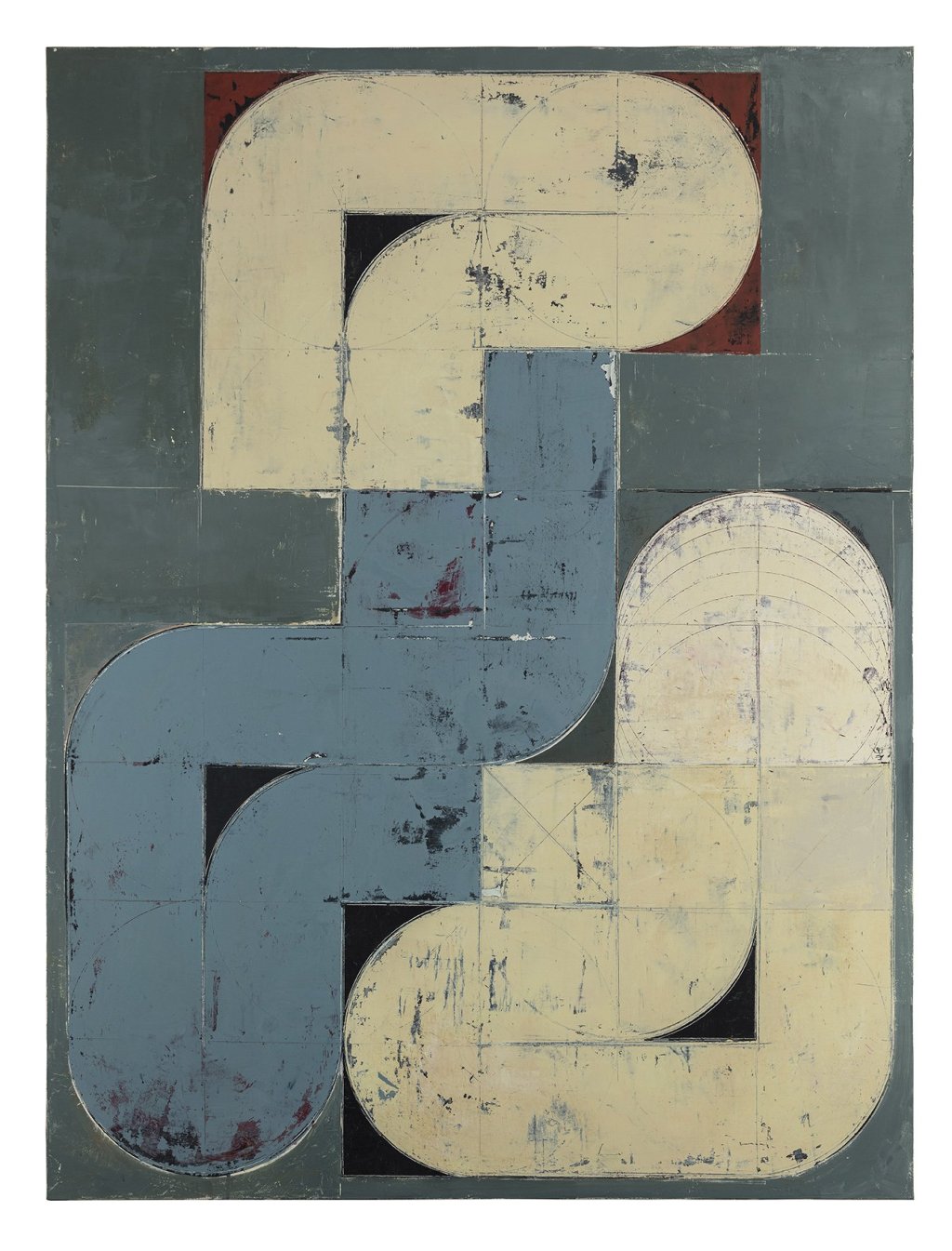
This cycle of cryptic abstractions by Aleksandar Bezinović borrows its title from Attar’s poem. In repetitive forms that rearrange themselves, we find keys to proportions, ratios, and rhythm that are inscribed into our perception, or rather, into our body. Before these works, we do not seek the relationship between the painting and ourselves (for that would imply we are two separate entities), but rather ourselves.
A painting, if executed well, is actually the Absolute itself. It is a work that brings us to self-realization through its formal relationships and structures of meaning. Bezinović’s canvases are mostly monumental, and on them, combinations of arch and circle segments look like an astonishing choreography seen from a distance. It is simultaneously the dance of dervishes and a mass rally celebrating an occasion in a socialist society. And it is truly both: for there is no duality between the metaphysical and the mundane, the spiritual and the secular, nor between the individual and the community, whose existences alternate before our eyes in such dances. Because of this, these paintings are, on the one hand, distinctly material in their presence. Not only through their aforementioned scale, but also through visibly loose, open layers of paint. Contributing to their presence are also lead sheets integrated into the paintings – that rough material emphasizing the physical permanence of these creations.
In harmonic balance with such an approach stand abstract ornaments, energetic tracks of black-and-white dynamics, only occasionally intersected by a tiny trace of colour. In a way, these are also arabesques. Rough, massive, and irregular (or rather, possessing a regularity that eludes symmetry and relies instead on balance within the dynamic arrangement of their parts), yet arabesques nonetheless. In Bezinović’s work, as in Islamic art, they can point to abstract concepts, spiritual values, into some supposed spiritualization through minimal form, is a mistaken path, for it presumes the separation of spirit and matter as well as the primacy of the former over the latter. The realization of the One is different.
We can see this in Bezinović’s path toward the Simurgh. Our path to Ourselves. Through the language of painting.
Feđa Gavrilović

